(The complete listing of learning skills is available at www.processeducation.org/cls/web/)
Prioritizing — consistently putting the most important things first
A note before we start. Almost everyone who says they have a time management problem has a prioritizing problem. Time management is deciding when; prioritizing is deciding what matters, and you cannot do the first honestly until you have done the second. A student (*cough*) who reorganizes their calendar without ranking anything has built a prettier container for the same chaos. So this issue, we’re going after the skill underneath.
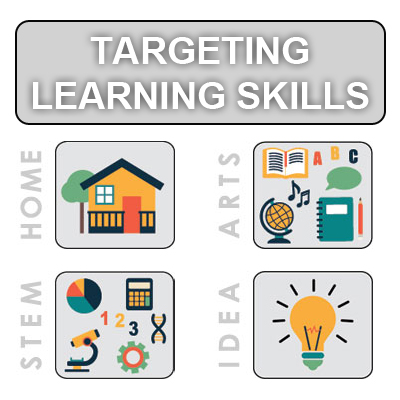
Where and how to TARGET it:

Ideas for helping young children develop the skill
Children are not short on priorities. They have exactly one, and it is whatever is in front of them. Teaching this skill is mostly teaching that “later” is a real place where things still exist.
- The Three-Thing Morning Instead of a list, name three things and say them in order, out loud, together. The ordering is the lesson; the list is just the excuse for it.
- First / Then Talk Narrate your own sequencing as you go. “First the shoes, then we look for the dinosaur.” Children pick up ordering as a value long before they can explain it as a rule.
- Toy Triage Before a trip, one small bag. Which three toys come along? Making the choice is good; getting them to tell you why is much better. This is where a child first meets the idea that choosing costs something.
- What Happens If We Don’t? Ask about the consequence of skipping something. Consequence is the tool that turns a flat list into a ranked one, and it works at every age after this one, too.

Ideas for helping students in the liberal arts develop the skill
Everything on a humanities syllabus can look equally important, because it is all reading and it is all assigned. Prioritizing here means learning that not every source carries the same weight in an argument, and neither does every claim in your own draft.
- The One-Source Defense Before drafting, students name the single most important source on their list and defend the choice in three sentences. Most will discover they haven’t actually ranked anything.
- Cut the Reading Hand out a bibliography of ten items and ask which three survive if the semester were half as long. Then have two students compare and argue. The argument is the exercise.
- Thesis Triage Students list every claim in their own draft, rank them by how much weight each one bears, and cut the bottom third. Papers get better. More importantly, students find out how much of their writing was decoration. (There are many quotes from famous authors and critics about how a given manuscript would be tremendously improved by removing nearly all adjectives or adverbs.)
- The Deadline Autopsy After a major paper, students map how they actually spent their hours against how they would spend them again. Do this once and it changes the next paper; do it three times and it changes the student.

Ideas for helping students in STEM courses develop the skill
Prioritizing in technical work looks like knowing which term dominates, which error matters, and which piece to attack first. It is a judgment skill, and it is almost never taught explicitly…we tend to model it and hope.
- Order of Attack Before solving anything, teams rank the subproblems by which one unlocks the others. Then rankings go on the board and get compared. Watching two defensible orderings disagree teaches more than any single correct one.
- Dominant Term This is an estimation exercise: which variable actually drives this result? Practice throwing away what does not move the number. Students trained only on exactness find this genuinely uncomfortable and that’s kind of the point.
- The Constraint Budget A design problem with four specifications and permission to optimize only two. Forcing the trade-off into the open is what makes it a decision rather than a preference.
- Debug Triage Give them code, a circuit, or a lab procedure containing five faults of wildly different severity. Which do you fix first, and why? The “why” is the whole point.

Fun ideas for developing the skill with family or friends
Most of what we call a scheduling problem is a decision we have been avoiding. But nobody builds a judgment skill by starting with the hardest judgment they face. Practice where the stakes are low and the company is good, and it will be there when the stakes are not.
- The Ten-Minute Cut After watching a movie with friends or family, ask everyone which 10 minutes they would cut, and what breaks/changes if that cut is made. Ultimately, everyone is ranking scenes by how much weight each carries. (This is the same dynamic as learning to cut the weakest third of a writing draft, except nobody cries and there are snacks.)
- Three Dishes for the Table Out to eat with friends, agree that the table orders only three things. Everyone advocates for one and has to defend it. What surfaces almost immediately is the difference between I want this and this is the best one for us and learning to feel that difference is most of the skill.
- The Resource Tell Next games night, watch for the moment someone works out which resource unlocks all the others. In most games it decides the winner, and it is almost never the resource that looks most valuable. (This is the same instinct that tells an engineer which sub-problem to attack first, but again, fewer tears and nothing structural collapses.)
- The Want-To / Need-To Split Write down everything you think you have to do this week, then sort it into two columns: things you actually want to do, and things you feel obliged to do. Work down the obligation column asking, for each item, who is actually asking me to do this? Sometimes there is a real person with a real expectation. Often there isn’t…and what you find instead is a habit, a commitment nobody else remembers making, or a version of yourself from three years ago with different priorities. Those are the ones to renegotiate or drop. (Try this one before the term starts. Ideally with somebody who will ask you about it in October. O.o)