Author: Pacific Crest

  • The Self-Growth Research Summit

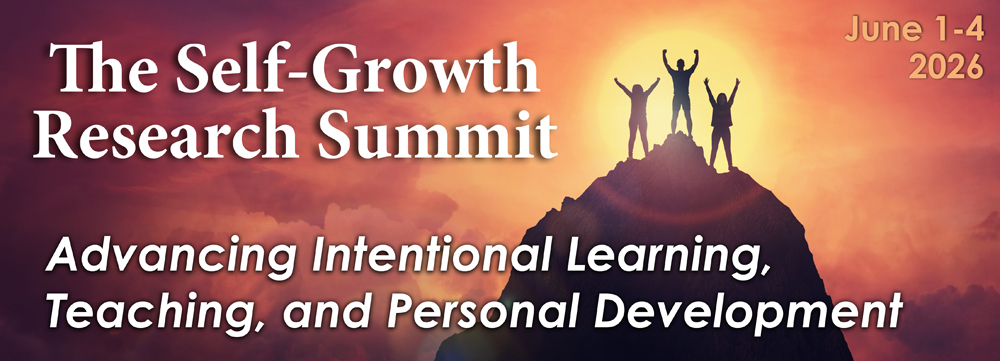
    The Self-Growth Research Summit

    Advancing Self-Growth Through Research, Practice, and AI

    The Research Summit brings together educators and researchers to move beyond theory into the active design of self-growth systems. Across seven sessions, participants engage in inquiry, model development, and applied design—advancing both the science and practice of helping individuals become self-growers.

    LOCATION

    The Summit sessions will use the plenary session area at West Coast University for in-person attendees. (This is the same room used for the pre-conference workshops and all the plenary sessions.)

    Those planning to attend online will be provided with the Zoom links to the sessions. (Those same links will also be available from the PE Conference Support Site.)


    REGISTRATION

    There is no fee for those already registered for the Conference but WE DO NEED TO KNOW how many will be attending (for food and for breakout rooms). Please email Dan Apple [email protected] if you plan to attend any or all Summit session.


    DINNER IS ON STEVE!

    Catered dinners will be provided free of charge for in-person attendees (Steve Beyerlein is hosting the catered dinners). He does need how much food to order though, so PLEASE let Dan know if you’ll be attending in-person.


    PLANNED SESSIONS

    Session 1 (Mon, 4:00–5:45 PM)
    The Self-Growth Project: Where We Are Now
    An opening orientation to six years of research and system development. Participants align on the architecture of the Self-Growth System, key discoveries, and the major questions that will shape the next phase of work.


    Session 2 (Mon, 6:15–8:00 PM)
    Defining What a True Self-Grower Looks Like
    This session establishes clear capability thresholds for independent self-growth. Participants explore the behaviors and patterns that demonstrate increasing clarity, intentionality, and the ability to design and govern one’s own development.


    Session 3 (Tues, 4:00–5:45 PM)
    Analyzing Current Self-Growth Research
    Working in teams, participants analyze existing IJPE research to identify key discoveries, recurring patterns, and critical gaps—building a shared foundation for future inquiry.


    Session 4 (Tues, 6:15–8:00 PM)
    Writing to Think for Research: Generating the Next Wave of Questions
    Participants use writing-to-think as the primary method for developing new research questions, study designs, and measurement strategies. As the inquiry unfolds, the group simultaneously identifies the practices that strengthen thinking—producing a set of high-value Writing-to-Think practices grounded in real research work.


    Session 5 (Wed, 4:00–5:45 PM)
    Designing the Next Phase of the Self-Growth Project
    This session translates research questions into actionable experiments, addressing program design, coaching structures, AI integration, and data collection to scale the development of self-growers.


    Session 6 (Wed, 6:15–8:00 PM)
    AI, Practice, and the Six Dimensions of Living Forward
    Educators explore how AI-supported practices can advance student development across six dimensions: becoming, impact, quality of life, wellness, relationships, and spirituality. The focus is on how specific practices—enhanced by AI—help students move directionally within each dimension, supporting holistic self-growth and life trajectory development.


    Session 7 (Thurs, 4:00–5:45 PM)
    Measuring Life Trajectory
    Participants develop and test frameworks for measuring monthly life trajectory, evaluating movement toward the Horizon Self across key dimensions. The session explores whether this model can serve as a unifying “North Star” metric for self-growth.


    Closing Conversation (Optional, Thurs 5:45–6:15 PM)
    A final synthesis of discoveries, next steps for publications, and the launch of Phase IV research and collaboration.


    Core Outcome of the Summit

    By the end of the week, participants will have:

    • Strengthened the foundation of the Self-Growth System
    • Defined capability thresholds for self-growers
    • Generated high-value research questions
    • Identified effective Writing-to-Think practices
    • Designed Phase IV research experiments
    • Developed AI-supported approaches to holistic student growth
    • Advanced frameworks for measuring life trajectory
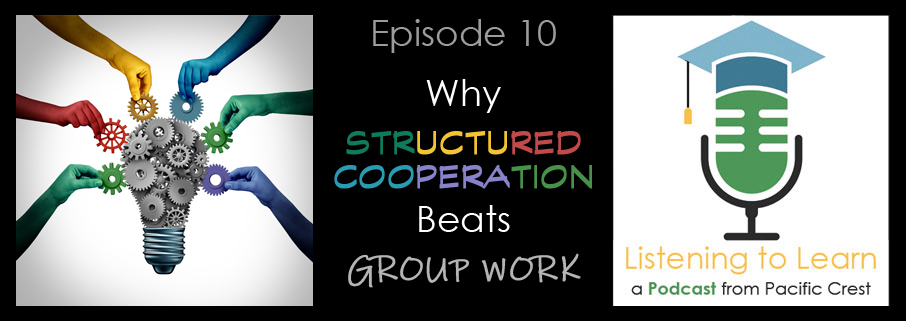
  • Episode 10: Why Structured Cooperation Beats Group Work

    Episode 10: Why Structured Cooperation Beats Group Work

    Listen on (click to choose)…

    This episode is specifically tailored for educators who might doubt whether the frustrations of requiring students to work in cooperative teams are truly worth the effort.

    Acknowledging the initial challenges, such as the upfront planning required and the difficult shift for instructors from being the “provider of knowledge” to a “facilitator”, this episode will reassure and persuade hesitant teachers. You’ll learn how the temporary hurdles of group work yield profound dividends, not only by increasing academic achievement, critical thinking, and retention, but also by equipping students with essential, lifelong interpersonal skills. By fostering positive interdependence and shared accountability, you’ll find out how cooperative learning prepares students for collaborative environments in the real world, ultimately proving that the long-term benefits to both student development and academic success far outweigh the temporary classroom growing pains.

    (This episode is based on 3.3.2 Cooperative Learning in the Faculty Guidebook and was generated, edited, and approved by Denna Hintze, using Google NotebookLM.)


    Beyond the Groans: Why Structured Cooperative Learning is Worth the Upfront Chaos

    Let’s be honest: announcing a group activity often triggers a synchronized classroom groan. And as educators, we might secretly want to groan alongside them. Implementing cooperative learning requires us to step down from the comfortable podium of the “expert on all” and embrace the infinitely messier role of “facilitator”. It requires significant upfront planning to structure activities to fit within class time limits, and it demands that students transition from passive recipients of knowledge to active, accountable contributors—an accountability they frequently resist.

    With all these hurdles, why should we voluntarily invite this frustration into our syllabi? Because the evidence shows that the temporary discomfort of shifting classroom dynamics yields extraordinary long-term dividends.

    The Academic Return on Investment First and foremost, the academic outcomes are simply too robust to ignore. When we move away from individualistic competition and create safe, supportive group learning experiences, students demonstrate increased academic achievement, greater productivity, and enhanced critical thinking competencies. Instead of merely absorbing a lecture, students engage in lively peer interactions that foster a much deeper understanding of course content in both breadth and depth. Furthermore, cooperative learning is linked to higher overall college retention rates—a benefit that is particularly impactful for high-risk students.

    The Long Game: Preparing Students for Life But the true magic of cooperative learning extends far beyond the final exam or the confines of higher education. We are ultimately preparing students for life, and the modern world rarely allows us to operate in silos.

    By designing activities with “positive interdependence,” students learn that they are responsible not only for their own mastery of the material but for the success of their peers. This shared accountability forces them to flex crucial interpersonal muscles that are difficult to teach through a traditional lecture. They must practice articulating complex ideas, actively listening, managing inevitable conflicts, and appreciating individuals from diverse backgrounds and perspectives.

    Moreover, working in a supportive group encourages healthy risk-taking behavior, pushing students outside of their intellectual and personal comfort zones. This collaborative environment is directly associated with greater personal development, resulting in increased self-esteem, higher degree aspirations, and stronger problem-solving skills.

    Embracing the Facilitator Role Yes, adopting this approach requires a conceptual shift in how we view teaching. You will have to continuously assess group dynamics and perhaps even assign specific team roles, such as the “Optimist” (to keep the team in a positive frame of mind) or the “Spy” (to eavesdrop on other teams and gather helpful intelligence).

    However, sharing authority and trusting your students transforms your classroom from a static room into a dynamic laboratory where knowledge emerges from dialogue. The initial resistance—from both sides of the desk—is natural, but pushing through that frustration equips our students with the academic rigor and the essential, collaborative life skills they need to thrive long after they leave our institutions.

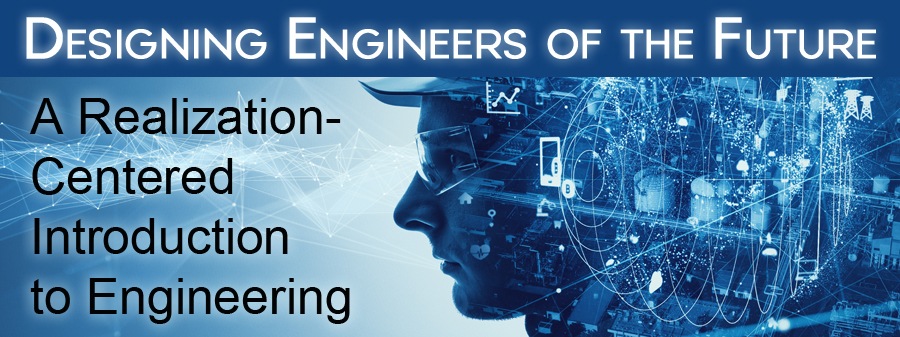
  • Becoming an Engineer: A Course in Engineering Realization

    Becoming an Engineer: A Course in Engineering Realization

    The Introduction to Engineering course launching in Fall 2026 at Eastern Michigan University is taking a new approach to engineering. Rather than serving as a survey of the field, this course is designed as the first step in developing an engineer of the future. We’re developing a book for the course and are pleased to share the book’s Forward to The Student


    Most students begin engineering by asking, “How do I solve this problem?”

    Fewer ask, “How do I become someone who can solve problems well, consistently, and with purpose?”

    This book, Designing Engineers of the Future, is built around the second question.

    Engineering is about realization — moving from ideas to outcomes, from uncertainty to decisions, and from initial attempts to improved performance. It is also about becoming someone who can do this work effectively, responsibly, and with increasing independence.

    You will not simply learn about engineering. You will learn how to:

    • think like an engineer
    • work like an engineer
    • and develop yourself as an engineer

    Throughout this experience, you will engage with engineering through five lenses:

    • Identity & Responsibility – understanding who you are becoming and the role engineers play in society
    • Disciplined Engineering Thinking – structuring problems, making decisions, and using models effectively
    • Development & Validation – designing, testing, and improving solutions
    • Accountable Engineering Practice – working in teams, communicating clearly, and making responsible decisions
    • Continuous Improvement & Self-Directed Development – learning how to learn, reflect, and grow over time

    These lenses are not separate topics. They are different ways of approaching the same work — the work of becoming an engineer.


    How You Will Learn

    This book is not meant to be read passively. It is designed to be used.

    You will learn through a variety of activity types that structure your experience:

    • Workshops introduce key ways of thinking and working
    • Competency activities ask you to demonstrate what you can do individually
    • Team-based realization activities engage you in designing, testing, and improving solutions
    • Design reviews provide opportunities to present your thinking and receive feedback
    • Reflection activities help you learn from your experiences and improve over time

    Many of these activities will take place in class with your team and with guidance from your instructor. Other parts will require you to think independently, reflect on your performance, and take responsibility for your own learning.

    At times, you may feel uncertain or challenged. This is not a sign that something is wrong — it is a sign that you are being asked to think in new ways. Engineering is not learned by following steps alone. It is learned by working through ambiguity, making decisions, and improving over time.


    Your Role

    In this course, you are not just completing assignments. You are developing capabilities that will carry into the rest of your engineering education and beyond.

    You are expected to:

    • engage actively with your team and your instructor
    • prepare for class and contribute to shared work
    • reflect on your performance and use feedback to improve
    • take increasing responsibility for your learning

    You will be supported throughout the course, but you will not be given all the answers. Instead, you will be asked to develop them, test them, and refine them.


    What You Will Gain

    If you engage fully in this experience, you will leave with more than an introduction to engineering.

    You will develop:

    • the ability to approach unfamiliar and complex problems
    • the discipline to evaluate and improve your own work
    • the skills to collaborate and communicate effectively
    • the capacity to direct your own learning

    You may also find that this course feels different from others you have taken. It is designed not only to help you succeed here, but also to help you navigate the broader challenges of the engineering curriculum — where expectations are high, problems are not always clearly defined, and persistence is essential.


    This book is an invitation to take ownership of your learning and your development.

    The work may be demanding, and at times uncomfortable, but it is through that work that you begin to build the habits, judgment, and independence that define effective engineers.

    We look forward to seeing what you realize — and who you become.

  • Special Interest Groups for Advancing Process Education

    Special Interest Groups for Advancing Process Education

    The Academy is forming Special Interest Groups (SIGs) in the areas of lifelong learning, self-growth, and AI in the classroom. These SIGS will bring together members with shared passions in Process Education. These groups are envisioned as vibrant spaces where “birds of a feather” gather to explore cutting-edge questions, develop tools, incubate innovations, and generate collaborative scholarship that advances our field.  A SIG provides opportunities for: Distributed leadership across interest areas, Focused inquiry aligned with practitioner needs Mentorship pathways for members new to PE scholarship, and Greater visibility for emerging projects and scholarship-in-progress.

    During this year’s PE Conference, on Thursday, June 4, at 9:30am Pacific (12:30pm Eastern) a Plenary Session “PE Special Interest Groups” will be facilitated by Steve Beyerlein, Kathy Burke, and Cy Leise.

    This session is an opportunity to test interest levels, identify core collaborators, and co-define the purpose and structure of each SIG.  The three pilot SIGs will be introduced in parallel working group meetings during the second half of this session. An agenda for periodic SIG meetings throughout the rest of 2026 is planned with the following outcomes in mind:

    • Deepen community connections around each SIG theme
    • Incubate innovative models, tools, and frameworks aligned with PE philosophy
    • Identify research opportunities and practitioner projects
    • Launch collaborative pathways for publication and resource development
    • Support resource sharing, mentorship, and cross-institutional collaboration

    Please consider joining us either in person or online!

  • Free Books!

    Free Books!

    Use this link: https://bookstore.pcrest.com/discount/SPRINGCLEANING and your 100% discount will be automatically applied at checkout.

    These two books and the special edition of the International Journal of Process Education are FREE to educators. You pay only shipping. This is significant savings:

    The Student Success Toolbox is regularly priced at $17.33
    The Professional’s Guide to Self-Growth usually costs $20.85
    And the special edition of the IJPE regularly runs $3.00

    • The Student Success Toolbox is the definitive collection of tools that make increased success possible for any student. With the tools (forms, rubrics, methodologies, and profiles) to support improved performance through assessment, it will help students with organization, reading, writing, thinking, communicating and collaborating. More than 20 years in the making, the Student Success Toolbox is the definitive collection of tools and tips that make increased success possible for any student. With the tools (forms, rubrics, methodologies, and profiles) to support improved performance through assessment, it will help your students be more organized and better readers, writers, thinkers, communicators, and team players.
    • Choosing The Professional’s Guide to Self-Growth is to commit to living life on your terms by developing the characteristics of a professional self-grower. Self-growers take ownership of their lives and their learning. Self-growers develop the characteristics of the strongest professionals and apply them equally well to career, school, and life. Over the last twenty-five years as college-level educators, we have helped tens of thousands of professionals, both future and current, apply the concepts in this book. We realized we could help more people, faster, by writing a book to help learners build these skills themselves.
    • This special edition of the International Journal of Process Education (published in 2016) celebrates 10 years since the inception of the Academy of Process Educators and 25 years of scholarship in Process Education. The wealth of scholarship, learning tools, and best practices that has evolved over this period is immense. Many of the original Academy members contributed to this special edition of the IJPE, helping to trace the evolution of Process Education. The content of the article falls into five key areas: (1) Learner Development, (2) Cultural Transformation, (3) Assessment, (4) Educator Advancement, and (5) Curriculum Design. The practices or significant research that advanced each are shared within that area. These practices and research are presented chronologically. so the development and connections can be observed. A special sixth area chronicles the Academy of Process Educators as a case study in a successful professional learning community.
  • Education News

    Education News

    The early months of 2026 have been a period of intense anxiety for faculty and staff across U.S. higher education. Based on developments from January to March 2026, here are four areas of concern for higher education professionals:

    Research Funding “Settlements” and Grant Terminations

    Faculty are increasingly alarmed by the use of federal research dollars as a bargaining chip. While the Senate moved to reject 40% cuts to the NIH and NSF in January 2026, the administration has used the Department of Government Efficiency (DOGE) to bypass traditional channels. In March 2026, the National Endowment for the Humanities (NEH) issued termination letters for approximately 1,400 grants. Major institutions like Columbia and UPenn have reportedly entered “settlements” with the White House to restore frozen funding in exchange for unspecified concessions regarding campus policies.

    The Weaponization of Accreditation (The AIM Committee)

    In February 2026, the Department of Education officially launched the Accreditation, Innovation, and Modernization (AIM) Committee. Staff and administrators fear this is the “secret weapon” intended to dismantle the current peer-review system. The stated goal is to replace “DEI-based standards” with “intellectual diversity” requirements and outcome-based metrics (like graduate earnings). Professors worry this will allow the federal government to effectively “de-accredit” schools that do not align with the administration’s ideological priorities.

    Mandated Race Data Collection and “Witch Hunt” Fears

    On March 11, 2026, a coalition of 17 states sued the administration over a new mandate requiring colleges to collect and report seven years of detailed race, gender, and income data for all applicants. Professors and admissions officers are concerned that this data is being weaponized to identify and punish institutions that continue to practice holistic admissions. Faculty at some institutions have reported a “chilling effect,” where they fear that even private internal discussions about equity could be subject to federal subpoenas.

    Deportation of Protesting Non-Citizen Scholars

    A major point of contention for faculty unions (like the AAUP) is the administration’s policy of revoking visas and initiating “self-deportations” for international students and faculty who participate in campus protests. In March 2026, lawsuits were filed highlighting cases where non-citizen instructors were placed on leave or faced detention for political speech. This has led to widespread “self-censorship” among international scholars, who represent a vital part of the U.S. research workforce.

    There are ongoing and significant shifts in higher education policy as the Trump administration continues its effort to reorganize the Department of Education (ED) and implement the One Big Beautiful Bill Act (OBBBA).

    Massive Overhaul of Federal Student Loan Regulations

    Following a 30-day public comment period that ended on March 2, the Department of Education is moving forward with a regulatory package that fundamentally changes how graduate students borrow money. The new rules implement the OBBBA’s elimination of the Grad PLUS program, replacing it with strict annual and aggregate loan caps for graduate and professional degrees. The administration argues this will force universities to lower tuition, while critics warn it may limit access to high-cost degrees like medicine and law.

    Multi-State Lawsuit Against DEI Data Collection

    On March 11, New York Attorney General Letitia James and a coalition of 16 other state attorneys general sued the administration over its new “Admissions and Consumer Transparency Supplement.” This mandate requires colleges to report seven years of detailed admissions data broken down by race, gender, and income. The administration claims the data is needed to root out unlawful “affirmative action” disguised as DEI, while the lawsuit alleges the survey is an illegal “witch hunt” that violates student privacy and administrative laws.

    Appellate Court Blocks Federal Funding Freeze

    The U.S. Court of Appeals for the First Circuit upheld a ruling on March 17 that blocks the administration’s “sweeping” suspension of federal agency funding. Originally imposed by the OMB in early 2025, the freeze had targeted billions in grants, specifically those related to Diversity, Equity, and Inclusion (DEI) and climate change within universities. The court ruled that the freeze likely exceeded presidential authority and undermined the separation of powers.

    There’s always good news, if you look carefully enough!

    Continued Growth in Diverse Student Enrollment

    New data from the Common App, reported on March 13, revealed that Black students are the fastest-growing demographic among applicants for the current cycle. Analysts noted that despite the 2023 Supreme Court ruling on race-conscious admissions, applications from underrepresented students have shown “no meaningful deviations” from previous upward trends. This suggests that university outreach efforts and simplified application processes are successfully maintaining a diverse pipeline of talent.

    Seattle University’s Technology Ethics Student-Scholar Program

    Seattle University highlighted the progress of its new Technology Ethics Initiative, which pairs students with faculty to co-author research on the “Wild West” of technology law and AI ethics. By providing stipends and seed funding, the university is integrating high-level research into the undergraduate and law school experience, focusing on “public-interest technology” that serves society.

  • Episode 9: Getting from THINKING they know to KNOWING they know

    Episode 9: Getting from THINKING they know to KNOWING they know

    Listen on (click to choose)…

    Do you ever feel a disconnect between the content you’ve carefully planned and meticulously taught and what your students actually walk away with?

    You’re not alone. Research highlights a significant gap: while faculty often test for high-level working expertise, many students are still stuck at the level of basic information processing. This gap doesn’t just lead to student frustration—it can lead to professional burnout for educators who feel like they’re trying to fill a sieve with water when what they really want is to foster growth and success in their students.

    The solution to this common and depressing situation is teaching students the skills required for self-validation.

    What is Self-Validation?

    It’s the bridge that allows a learner to move from thinking they know to knowing they know. When students—and professionals—cultivate these skills, they stop being passive recipients of information and start “owning” their learning. This is the foundation of lifelong learning and personal growth.

    To build the bridge across the gap between thinking and knowing, we have to shift our mindset. Instead of simply covering our disciplinary content, we need to become facilitators (mentors of learning) who help students learn to take primary responsibility for their own choices. There are 7 techniques that help students learn to validate their own mastery:

    1. Concretize the knowledge: Apply concepts to real-world, specific examples to test perceptions.
    2. Transfer contexts: Challenge yourself (and your students) to apply knowledge in at least three significantly different environments.
    3. Generalize the knowledge: Identify the boundaries of a solution to ensure it is robust and valuable.
    4. Create a general model: Construct a representation that covers all possible cases—something so clear it can be used to teach others.
    5. Identify critical issues: Surface the top five assumptions or questions that define the “boundaries” of the knowledge.
    6. Use in problem-solving: Demonstrate effectiveness by solving a real problem under pressure without a manual.
    7. Teach others: True mastery is validated when you can effectively guide someone else to the same level of understanding.

    Why This Matters (beyond the classroom)

    Self-Validation skills are hierarchical, and there is no upper limit to strengthening them in your own professional practice. By modeling these techniques, you aren’t just helping students pass a test; you are exercising “tough love” that prepares them—and you—for the challenges of life beyond the institution.

    When students begin to validate their own work, their confidence soars, and they become “full partners” in the learning process. As one student put it: “If I don’t push myself to learn to grow, nobody else will, and I won’t excel to my full potential”.

    Are you ready to stop validating for your students and start helping them validate for themselves?

  • Elevate your IMPACT
Pre-conference Workshops

    Elevate your IMPACT Pre-conference Workshops

    Join Us for Professional Development Workshops on June 1 (the day before PE Conference 2026 kicks off!)

    In the pursuit of academic excellence, the most impactful educators are those who never stop learning. As we prepare for the 2026 Process Education Conference (PEConf), we are excited to announce two intensive, high-impact workshops designed for higher-education professionals dedicated to transforming student outcomes and their own professional practice.

    These sessions are more than just seminars; they are interactive laboratories designed to provide you with actionable tools and research-based strategies you can implement immediately.


    Morning Session (8:30 am – 11:30 am PT)

    Process Education Through the Lens of Assessment: A Five-Level Journey

    Ideal for educators new to Process Education or those looking to deepen their mastery of student learning outcomes, this workshop guides participants through a “Five-Level Journey.” You will navigate through five interactive activities aligned with the core pillars of Process Education: learning, performing, assessing, growing, and self-mentoring.

    What to expect:

    • The SII Model: Experience real-time growth guided by the Strengths–Improvements–Insights (SII) assessment framework.
    • Practical Metacognition: Practice providing and receiving high-level peer feedback that goes beyond simple grading.
    • The Take-Home Toolkit: Every participant leaves with a specialized toolkit designed to support continued practice and adaptation in your specific academic context.

    Facilitators: Josh Morrison, Tris Utschig, and Steve Beyerlein


    Afternoon Session (12:15 pm – 3:15 pm PT)

    Fundamental Principles and Practices of Team-Based Learning (TBL)

    As teamwork becomes a non-negotiable skill in the modern workforce, Team-Based Learning (TBL) has emerged as a gold-standard pedagogy. This workshop offers an introductory overview of TBL specifically tailored for the Process Education community. You will explore how to move students from passive listeners to active collaborators through a sequence of individual preparation, teamwork, and immediate feedback.

    Why attend this session?

    • Evidence-Based Pedagogy: Learn how TBL utilizes continuous assessment to ensure student accountability and conceptual mastery.
    • Certification Path: This is the first of five workshops in the Knowledge of the Fundamentals of TBL series—a perfect starting point for those seeking formal TBL certification.
    • Integrated Success: Evaluate the unique benefits of TBL within the context of Process Education to maximize student engagement.

    Facilitators: Dr. William Ofstad, Dr. Leanne Coyne, and Dr. Yuqin Hu


    Why Invest in These Workshops?

    Whether you attend one or both, these sessions offer a rare opportunity to collaborate with industry leaders and like-minded peers. By focusing on the intersection of assessment and teamwork, you are investing in a more resilient, self-directed learning environment for your students—and a more rewarding professional journey for yourself.

    Registration Note: These workshops are designed to be highly interactive, so seating is limited to ensure a high-quality experience for all attendees.

  • Self-Growth Tip: Getting on Top of the Recurring Problem

    Self-Growth Tip: Getting on Top of the Recurring Problem

    Imagine this:

    You’re at bat during a baseball game and you’re repeatedly hit by the ball the pitcher throws. It is upsetting and hurts every time. Your immediate reaction each time you’re hit is confusion and anger. And your first thought is probably that the pitcher really sucks or is trying to hurt you.

    The only way to begin to deal with the situation is by stepping away, both physically and mentally. THEN you can begin to figure out why you keep getting hit by the ball. Stepping away allows you to…

    1. Stop getting hit (this part is really important because it’s hard to think objectively when the hits just keep coming) and
    2. Figure out what all those instances of getting hit by the ball have in common.

    Guess what? Every time you were hit by the ball, you were actually standing ON home plate instead of beside it. Of course you were getting hit by the ball over and over again!

    As amusing as this scenario may be, it also works as a metaphor for what happens when we repeatedly encounter the same concern, issue, or barrier multiple times (remember the movie Groundhog Day?). We can’t repeat our way out of a recurring situation and while crying may make us feel a bit better, it doesn’t stop the next ball from coming. When we recognize the repetition, we need to step back and examine the TYPE of situation that is repeating rather than each specific time we’re hit by the proverbial ball. There’s something all those situations have in common…what is it? What can we change?

    Sometimes we need to shift from affective reaction (crying, for instance) to cognitive exploration. Consider thinking from the pitcher’s perspective…where are they taught to throw the ball? Or other batters: Where do they stand when at bat? 

    A real life example (because we hopefully know better than to stand on home plate) is when we get that nagging feeling that others might not respect us. When we feel this repeatedly, we need to step away from ‘home plate’ to stop feeling and reacting on that basis. Instead, we can look around ourselves, exploring the contexts in which these feelings occur and what they have in common. Once we know that, we can begin to plan the changes we can make so we don’t keep getting hit by the “people don’t respect me” ball.

  • Targeting a Learning Skill: ILLUSTRATING

    Targeting a Learning Skill: ILLUSTRATING

    Improving the skill of Illustratingenhancing a message with images, props, drawings, or body language—is critical because there is a direct correlation between refining such skills and being successful as a student. As a learning skill, illustrating is not limited to a single context; it is embedded in everyday behavior and can be consciously improved to increase the effectiveness of overall learning.


    Ideas for helping young children develop the skill

    Teaching children to use visuals and their bodies to communicate makes their messages more vibrant and easier to understand.

    • Model Illustrating: Children learn by example, so use your hands and nearby objects to “paint a picture” of what you are saying. If you are talking about a big elephant, stretch your arms wide and point it out when the child does the same.
    • Use Specific Gestures: Teach the child that certain movements have meaning. For instance, sweeping your hand can mean “a long time ago,” or pointing to your heart can illustrate “this makes me happy”.
    • The “Mystery Prop” Game: Give the child a random object (like a spoon or a hat) and ask them to tell a story where that object represents something else. This helps them learn to use props to enhance their message.
    • Open-Ended “Show Me” Questions: Instead of just asking “How was your day?”, ask “Can you show me with your face and body how you felt at recess?”. Modeling this response teaches them to engage thoughtfully and use their full physical attention to communicate.

    Ideas for helping students in the liberal arts develop the skill

    In the liberal arts, the ability to illustrate abstract concepts through physical or visual metaphors is the “single best tool” for deeper communication.

    • The Persona Interview with Props: Incorporate theater into history or literature courses. Have a student take on the persona of someone like Emily Dickinson or Freud, but require them to use three specific props or drawings to explain their core philosophy to the “audience”.
    • Empathy through Body Language: Use role-playing to practice how body language can change the “message” of a historical text. Students can experiment with how standing tall versus slouching changes the impact of a famous speech.
    • Moderated Visual Discussions: Instead of a standard debate, have students draw “concept maps” on a board as they talk. This forces them to extract maximum meaning from one another by visualizing how their ideas connect or overlap.

    Ideas for helping students in STEM courses develop the skill

    For STEM students, illustrating is vital for turning complex data into understandable schemas.

    • Spot-Modeling Diagrams: As students work in teams, the instructor should do “spot models” of how to quickly sketch a diagram to solve a problem. Focus on the process of illustrating the logic rather than the artistic quality of the drawing.
    • “Clients and Specifications” with Visuals: Play a game where the instructor is a client who needs a structural or biological problem solved but doesn’t understand technical jargon. Students must use props, drawings, or body language to explain their solution so the “client” can visualize it.
    • Teaming and Collaboration: Use whiteboards or digital shared spaces where students must “illustrate” their mathematical thinking to their peers to ensure everyone is following the same schema.

    Fun ideas for developing the skill with family or friends

    Personal interactions are perfect for practicing how to make your messages more engaging through illustration.

    • The “Silent Subtitle” Challenge: Watch a foreign film and mute the sound. Try to guess the message of the scene based solely on the characters’ body language and the “props” in their environment. Discuss with a friend what perspectives and motivations you found through these visual cues.
    • The “Ineffective Illustration” Game: Watch a show or commercial and try to catch instances where a character’s body language doesn’t match what they are saying. Make a note of these contradictions and compare with a friend to see who caught the most “mixed messages”.
    • Catch the Drift: Notice when someone’s attention drifts while you are talking. Use it as a cue to “illustrate”—grab a nearby object or use a more descriptive gesture to bring their attention back and make your point clearer.