Author: Pacific Crest

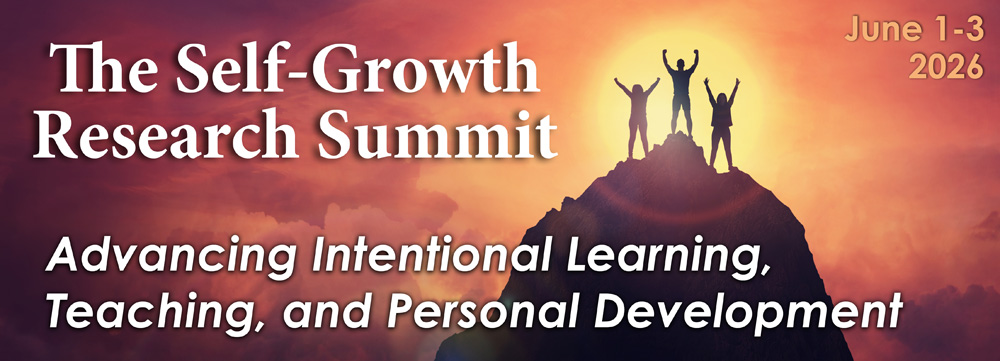
  • The Self-Growth Research Summit

    The Self-Growth Research Summit

    FREE for anyone who wants to attend, both in-person or online. Details will follow next month!

    The 2026 PE Conference offers two complementary pathways for faculty development—each designed to strengthen both professional practice and scholarly engagement in learning and self-growth.

    The main conference provides a broad exploration of proven Process Education practices—helping faculty enhance teaching, assessment, mentoring, and course design. It is ideal for those looking to improve learning environments and student performance using established methods. In contrast, the Self-Growth Research Summit is an immersive, collaborative experience where participants actively investigate how growth works at a deeper level. Rather than simply learning best practices, attendees engage in analyzing research, defining key concepts, and co-creating new frameworks, contributing directly to the evolving scholarship of self-growth .

    For faculty, this creates a powerful developmental opportunity:

    • The conference builds breadth—expanding your toolkit as an educator.
    • The research summit builds depth—strengthening your ability to understand, study, and intentionally develop growth in yourself and others.

    Participants in the summit not only leave with practical insights, but also with a heightened capacity for self-directed learning, reflective practice, and scholarly contribution—key elements of becoming a self-grower .


    Self-Growth Research Summit: Session Overview

    Session 1: The Self-Growth System — Foundations, Breakthroughs, and Open Questions

    Time: Monday, 4:00 – 5:45 PM

    What You’ll Experience:
    Gain a clear and accessible overview of the Self-Growth framework, including how individuals can intentionally guide their own development over time. Through guided discussion, participants explore major discoveries, core principles, and practical tools—while identifying important open questions for future research.


    Session 2: Defining the Self-Grower — What Does Independent Growth Look Like?

    Time: Monday, 6:15 – 8:00 PM

    What You’ll Experience:
    Work with colleagues to define what it means for someone to truly take ownership of their growth. You will translate ideas like reflection, intentionality, and planning into concrete behaviors—helping clarify what faculty can realistically expect and support in their students.


    Session 3: Mapping What We Know — Insights from Existing Research

    Time: Tuesday, 4:00 – 5:45 PM

    What You’ll Experience:
    Engage in small-team analysis of published research to uncover key findings about learning and self-growth. This session helps participants quickly get oriented to the field while identifying patterns, gaps, and opportunities for new investigation.


    Session 4: Organizing the Field — Key Domains of Self-Growth

    Time: Tuesday (Evening continuation)

    What You’ll Experience:
    Help structure the emerging field of self-growth by organizing ideas into major domains such as principles, capabilities, and internal roles. Participants co-create a clearer map of the field, making it easier to teach, research, and apply in educational settings .


    Session 5: Learning from Practice — What Actually Changed in Participants?

    Time: Wednesday

    What You’ll Experience:
    Examine real experiences from a six-month self-growth project in which individuals practiced weekly reflection and intentional planning. This session highlights what worked, what was challenging, and what led to meaningful changes in how participants approached their lives and work .


    Session 6: From Ideas to Action — Building the Future of Self-Growth Practice

    Time: Final Session

    What You’ll Experience:
    Synthesize insights from the summit to develop practical frameworks, research directions, and applications for your own context. Participants leave with both actionable strategies and potential scholarly contributions to advance teaching, learning, and self-growth.


    Why Attend the Research Summit?

    • Strengthen your own growth practices through structured reflection and intentional planning
    • Gain clarity on how to develop self-directed learners in your courses
    • Engage in meaningful scholarship that shapes the future of Process Education
    • Collaborate with a community of educators committed to improving learning and Quality of Life

    By combining participation in the main conference with the research summit, faculty move beyond simply applying best practices—they begin to understand, refine, and create them, positioning themselves as both effective educators and contributors to the advancement of self-growth education.

  • Designing Engineers of the Future

    Designing Engineers of the Future

    This fall, a new Introduction to Engineering course will launch in the Mechanical Engineering program at Eastern Michigan University. Rather than serving as a survey of the field, this course is designed as the first step in developing an engineer of the future.

    At its core is a guiding idea:

    Engineering is the disciplined practice of altering reality by design—and engineers are developed through engaging in that process.

    A Realization-Centered Framework

    The course is grounded in Mohamed El-Sayed’s Theory of Realization, which frames both engineering work and human development through stages of inception, conception, maturation, and becoming. Students experience realization not only as a process for creating solutions, but also as a pathway for becoming an engineer.

    To make this actionable, the course is organized around five lenses:

    • Identity & Responsibility
    • Disciplined Engineering Thinking
    • Development & Validation
    • Accountable Engineering Practice
    • Reflective Development

    These lenses emphasize both what engineers do and who engineers become, providing a consistent framework across activities, discussions, and assessments.

    From Exposure to Formation

    Many introductory courses emphasize exposure—what engineers do or what tools they use. This course instead emphasizes formation.

    Students engage in multiple realization cycles where they:

    • structure problems before solving them
    • develop and test design ideas
    • use evidence to guide decisions
    • refine solutions through iteration

    In doing so, they encounter three fundamental modes of engineering activity:

    • Problem Solving – altering the state of a situation
    • Design – altering physical reality
    • Research – altering our understanding of reality

    All three involve decision-making and movement from unacceptable to acceptable states, but differ in what aspect of reality they transform.

    Learning to Learn as a Core Capability

    A defining feature of the course is its emphasis on learning to learn. Through structured weekly reflection and improvement planning, students develop the ability to assess their performance, interpret feedback, and direct their own growth.

    This supports a critical transition:

    from following instructions to becoming a self-directed learner.

    Professional Practice from Day One

    Students also develop habits of accountable engineering practice, particularly in team settings. They learn how to conduct effective meetings, make and document decisions, and align their work with defined criteria—skills central to professional engineering.

    An Invitation

    This course represents an effort to rethink the role of introductory engineering education—not as content coverage, but as the beginning of professional formation.

    For faculty interested in integrating learning to learn into technical programs from the start, this approach offers a model worth exploring.