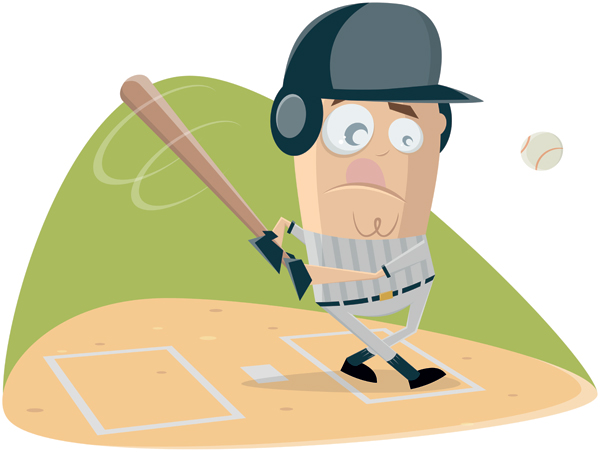
Imagine this:
You’re at bat during a baseball game and you’re repeatedly hit by the ball the pitcher throws. It is upsetting and hurts every time. Your immediate reaction each time you’re hit is confusion and anger. And your first thought is probably that the pitcher really sucks or is trying to hurt you.
The only way to begin to deal with the situation is by stepping away, both physically and mentally. THEN you can begin to figure out why you keep getting hit by the ball. Stepping away allows you to…
- Stop getting hit (this part is really important because it’s hard to think objectively when the hits just keep coming) and
- Figure out what all those instances of getting hit by the ball have in common.
Guess what? Every time you were hit by the ball, you were actually standing ON home plate instead of beside it. Of course you were getting hit by the ball over and over again!
As amusing as this scenario may be, it also works as a metaphor for what happens when we repeatedly encounter the same concern, issue, or barrier multiple times (remember the movie Groundhog Day?). We can’t repeat our way out of a recurring situation and while crying may make us feel a bit better, it doesn’t stop the next ball from coming. When we recognize the repetition, we need to step back and examine the TYPE of situation that is repeating rather than each specific time we’re hit by the proverbial ball. There’s something all those situations have in common…what is it? What can we change?
Sometimes we need to shift from affective reaction (crying, for instance) to cognitive exploration. Consider thinking from the pitcher’s perspective…where are they taught to throw the ball? Or other batters: Where do they stand when at bat?
A real life example (because we hopefully know better than to stand on home plate) is when we get that nagging feeling that others might not respect us. When we feel this repeatedly, we need to step away from ‘home plate’ to stop feeling and reacting on that basis. Instead, we can look around ourselves, exploring the contexts in which these feelings occur and what they have in common. Once we know that, we can begin to plan the changes we can make so we don’t keep getting hit by the “people don’t respect me” ball.